
cost of manufacturing microwave circuit board
The factors that influence the cost of manufacturing a circuit board are numerous, and they can vary from a few dollars to several hundred or even thousands. Bittele Electronics takes all of these into account when formulating the final price structure for our products. Among the main elements are the size of the PCB and its panel utilization, impedance control, routing, soldermask and silkscreen color, copper weight, and more. It’s important to know what influences the overall price of a circuit board to make a well-informed purchase.
One of the first major factors is the thickness of the microwave circuit board material. While standard FR-4 boards are relatively affordable, other materials such as polyimide and PTFE can raise prices significantly. The material used also impacts the thermal and environmental reliability of a circuit board. For example, a circuit board made with special RF components may require a material that can withstand high-intensity operations without damaging the board.
Another factor is the number of layers in a PCB’s design. The more layers a circuit board has, the higher its price will be, as each additional layer adds to the total production cost. Therefore, designers should aim to limit the number of layers in a circuit board’s design to reduce its manufacturing costs.
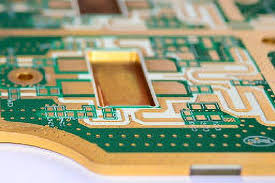
What factors influence the cost of manufacturing microwave circuit board?
The diameter of the holes in a circuit board’s design is also a significant factor in its price. Creating holes with a larger diameter will reduce the manufacturing cost, while creating smaller and more frequent holes will increase the price. Also, if the holes are of a unique shape or they need to be laser-drilled, these will also increase the price.
Finally, if a circuit board requires a special surface treatment such as hot air leveling, spraying pure tin or gold, or another type of technology, it will increase the cost. It’s worth considering these extra steps if the circuit board is intended for high-intensity use, such as in an aircraft or engine.
The fabrication process for microwave circuit boards is highly specialized, leveraging advanced manufacturing techniques to achieve tight tolerances and consistent performance. High-precision etching processes are used to define intricate conductor patterns on the substrate, while multilayer construction allows for compact designs with minimal signal loss. Surface mount technology (SMT) enables the precise placement of miniature components, further enhancing circuit density and performance.
It’s essential for manufacturers to consider all of the above when pricing a new circuit board. Otherwise, they could end up over-pricing the product and lose business. Moreover, it’s not worth cutting corners with quality by skipping out on testing and inspections, as this can lead to expensive and time-consuming refunds and damage customer relationships. By following these tips, a manufacturer can minimize its production costs and still provide a competitively priced product to their customers. This way, consumers can enjoy the benefits of innovative, advanced, and cutting-edge electronic devices.


