
Flex PCB Production in 5G Technology
The evolution of electronic technology has revolutionized many industries, enabling the development of smaller and more efficient gadgets that meet the growing demands of consumers and businesses. But the emergence of 5G technology is driving a need for even more advanced and powerful devices that can support higher data transmission speeds. The role of flex PCB production will play an essential part in the development of these next-generation devices.
A flex PCB has the ability to bend, twist, and fold without breaking, offering unparalleled design flexibility. This makes it an ideal choice for industries such as aerospace and defense, medical devices, automotive, and industrial automation, where compact, rugged, and reliable electronics assemblies are critical. In addition, the ability of a flex PCB to conform to complex geometries and withstand vibrations, temperature changes, and environmental stresses is particularly important in applications where weight savings are critical.
Flex PCBs are also used in the cellular communications industry to provide wireless connectivity to remote and mobile devices. This includes smartphones, smart speakers, and IoT gadgets, which require small, energy-efficient designs that can accommodate more functionality in a limited space while managing power efficiently. The cellular industry also relies on a high-speed, highly reliable 5G network to enable new capabilities like video streaming and mobile telemedicine. The 5G base station is the heart of this network, and a high-quality PCB will be essential for its performance.
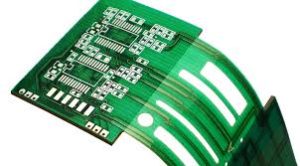
The Role of Flex PCB Production in 5G Technology
High-performance flex pcb production use copper as the primary conductor, and their layer stack-up is typically very dense. However, it is important to balance the thickness of the different layers to achieve optimal performance. This can be achieved by using blind and buried vias to reduce the number of interconnects, which can improve signal integrity, electromagnetic interference (EMI), thermal management, and routing control. In addition, it is crucial to minimize the traces’ length and distance to ensure good signal attenuation and crosstalk.
Another benefit of flexible PCBs is their ability to be used in unconventional layouts. This allows engineers to create innovative product designs that are more efficient and aesthetic than traditional rigid PCBs. For example, a flex PCB can be used to create unique shapes and enclosures for portable devices, which can improve the aesthetic of the device and its user experience.
As the cellular industry moves towards 5G, it will be crucial for fabricators to invest in the latest tools and techniques to optimize their processes for high-speed, high-density circuit boards. This will require a combination of advanced assembly techniques, component sourcing, and testing to ensure that the finished product meets all specifications and performance requirements. It will also be necessary to develop a more efficient and cost-effective manufacturing process that can accommodate the growing demand for fast-paced production of 5G devices.


