Back to the present, things are not all rosy. The relationship is on the verge of a breakdown and Nathansky dives deep into the pain and passion of the growing rift. Though he doesn’t put it down in stone, you wonder if the mental health of Paul is putting a strain on the family, the “guises” of Paul then becoming a visual metaphor for the alien that he’d become over time to even someone as close to him as Nadine. Or they could be read as the many facets of him, the roles that he played that Nadine once found attractive but which he has now lost through the struggles of life.
A question that Nadine asks her colleague and friend Adja (Sara Fazilat) articulates the core of the film: “Do you know the feeling when you look at a strange man and find it bizarre how he talks and what he says and after a while, you realize that it’s your own husband?” It’s all about the loss of the vital connection between two people and the loneliness that creeps into their companionship. Can your love for each other still stay unconditional? Can you love parts of someone and not the whole?
What gives the film its heft is the financial instability underlying the relationship. With restructuring underway in her factory, salary cuts and layoffs loom large for Nadine, while Paul is still trying to find his feet. The turmoil outside parallels and determines the tumult at home.
Every You Every Me mixes the surreal with the real, the beguiling and the bizarre with the socio-economic mundaneness, the tender with the harsh to intimately chronicle a relationship hitting its “best by” date.
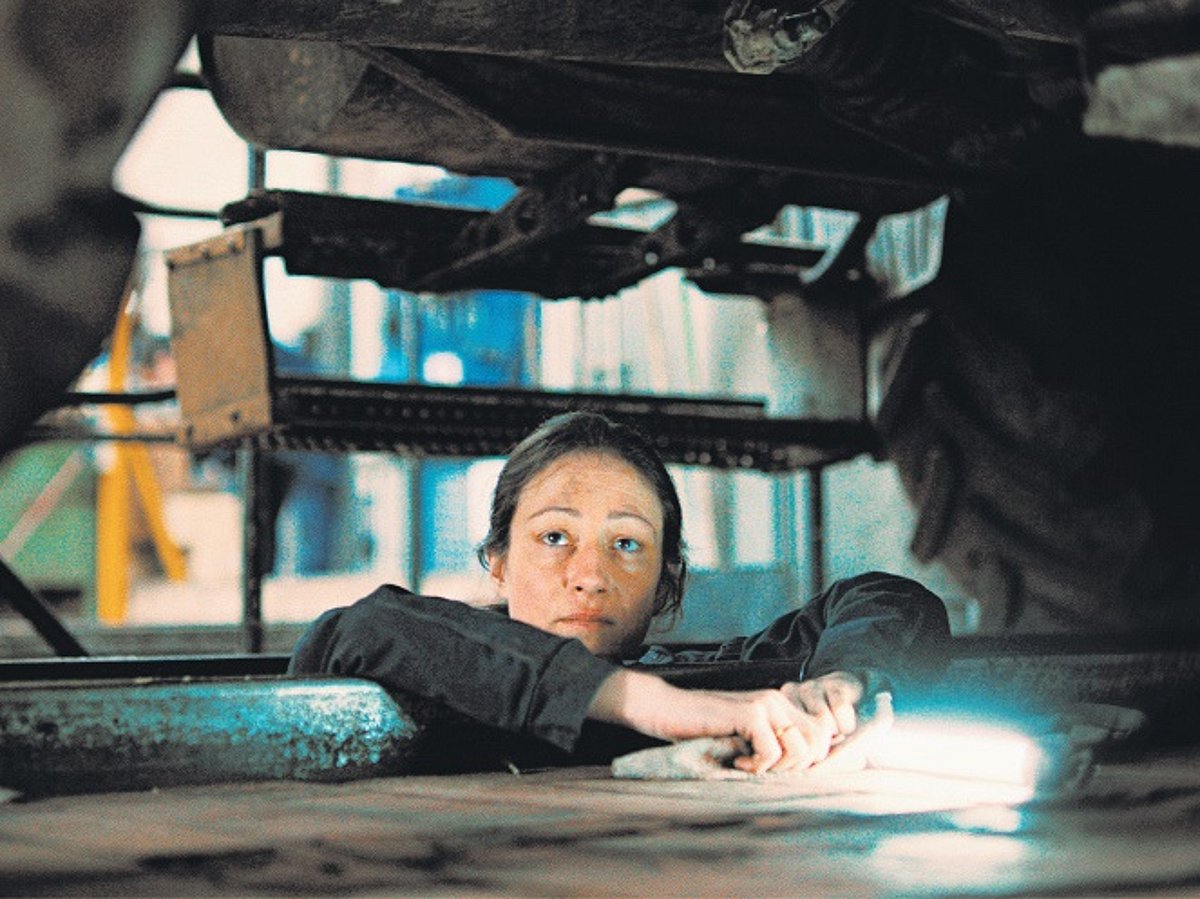
While Ljubek as Paul personifies the enduring faith in love, it is Schwarz’s wondrous performance that illuminates the contradictions, complications and, scepticism about love. Her Nadine is a woman who is centred and seemingly in control but is she really? She is someone others rely on but could do with a little help and support herself.
Schwarz’s haunting, melancholic face and her inquiring gaze convey the repercussions of being forced to bear the burden of love, and the twin pulls of wanting to love a man but not being able to do so. The film unfolds entirely from her perspective. “Why do I not love you anymore?” she asks Paul. The film—with its tad overwrought and protracted narrative—doesn’t answer that question clearly either. It’s about misplaced love and grappling with its loss rather than walking through the process of its steady disappearance.